


Who Is Liable for an Apartment Building Fire in New York?
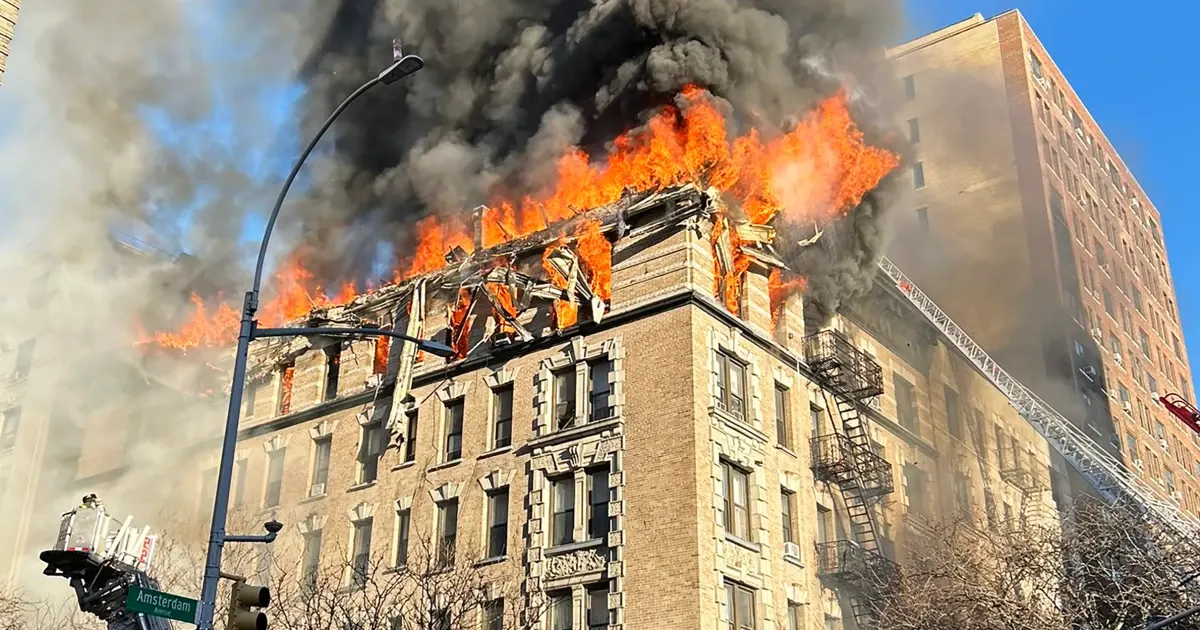
An apartment building fire can leave residents with devastating burns, smoke inhalation, permanent scarring, emotional trauma, lost income, destroyed belongings, and no safe place to live.
After the immediate danger has passed, victims and their families are often left asking one critical question:
Who is legally responsible?
Direct Answer: Who Is Liable for an Apartment Building Fire in New York?
A landlord, building owner, property manager, contractor, tenant, product manufacturer, utility company, or government entity may be liable for a New York apartment fire. Liability depends on who caused the fire and whether unsafe wiring, defective smoke detectors, broken self-closing doors, blocked exits, ignored complaints, or other dangerous conditions contributed to the injuries.
The person who caused the first flame is not necessarily the only responsible party.
For example, a tenant may accidentally start a cooking fire. However, if a broken smoke detector delayed the warning, a defective apartment door allowed smoke to fill the hallway, or a blocked stairwell prevented residents from escaping, the landlord or another party may share liability.
Anyone seriously injured in an apartment fire should speak with experienced New York fire and burn injury lawyers before critical evidence is repaired, removed, discarded, or destroyed.
Key Takeaways
- A landlord is not automatically liable simply because an apartment fire occurred.
- Liability may arise from the condition that started the fire or a safety failure that made the fire more dangerous.
- More than one person, company, or government entity may be responsible.
- Code violations involving smoke detectors, self-closing doors, exits, wiring, or maintenance may provide important evidence.
- A landlord may still be liable even when a tenant, contractor, or defective product started the fire.
- Shorter deadlines may apply when public housing or another government-controlled property is involved.
Who May Be Responsible for an Apartment Fire?
| Potentially liable party | Possible basis for liability |
|---|---|
| Landlord or building owner | Unsafe property conditions, poor maintenance, ignored complaints, or code violations |
| Property management company | Failure to inspect, arrange repairs, maintain common areas, or correct known hazards |
| Electrician or contractor | Negligent wiring, heating, alarm, renovation, or repair work |
| Tenant, occupant, or guest | Careless cooking, smoking, candles, heaters, batteries, or intentional conduct |
| Product manufacturer or seller | Defective appliance, battery, charger, smoke detector, or electrical product |
| Utility company | Negligent gas or electrical installation, inspection, maintenance, or emergency response |
| Municipality or public authority | Unsafe conditions in public housing or another government-controlled property |
Apartment fire cases often involve several overlapping failures. Each party’s conduct must be investigated separately.
Is a Landlord Automatically Liable for an Apartment Fire?
No. A landlord is not automatically responsible simply because a fire occurred inside the building.
To establish negligence, an injured resident generally must show that:
- The landlord or another defendant owed the resident a legal duty.
- The defendant failed to act with reasonable care or violated an applicable safety requirement.
- The failure caused or contributed to the resident’s injuries.
- The resident suffered legally recognized damages.
A landlord may be responsible when the landlord created a dangerous condition, knew about it, or should reasonably have discovered it through appropriate inspections and maintenance.
Evidence that may show a landlord had notice of a fire hazard includes:
- Tenant complaints
- Emails and text messages
- Maintenance requests
- 311 complaints
- Inspection reports
- Prior building or fire code violations
- Repair records and invoices
- Photographs and videos
- Reports of recurring electrical, heating, alarm, or door problems
- Complaints made by other residents
A landlord may still be found negligent even if no government agency issued a formal violation before the fire. A property owner’s responsibility to maintain reasonably safe premises is not necessarily limited to hazards already documented by an inspector.
Can a Landlord Be Liable if a Tenant Started the Fire?
Yes. A landlord may share liability even when a tenant, guest, or another person caused the initial fire.
The cause of the first flame and the reason residents were injured are not always the same.
Suppose a tenant accidentally starts a kitchen fire. The tenant may bear some responsibility. However, the landlord or building owner may also be liable if:
- The apartment did not have a working smoke detector.
- The apartment door failed to close and latch.
- Smoke entered a public hallway or stairwell.
- A fire escape was obstructed.
- An emergency exit was locked.
- The building’s alarm system did not function.
- Known electrical or fire safety problems were ignored.
The investigation must determine not only who started the fire, but whether additional safety failures allowed the fire or smoke to spread, delayed the warning, or prevented residents from escaping.
When Can a Landlord Be Liable for an Apartment Fire?
A landlord or building owner may be liable when negligent ownership, inspection, maintenance, or management caused the fire or made the resulting injuries more severe.
Faulty or Unsafe Electrical Wiring
A landlord may be liable when an electrical hazard caused the fire and the owner knew or should have known about the unsafe condition.
Potential hazards include:
- Exposed or damaged wiring
- Outdated electrical systems
- Overloaded circuits
- Defective electrical panels
- Frequently tripping circuit breakers
- Sparking outlets
- Flickering lights
- Burning odors
- Illegal electrical work
- Repairs performed without required permits
- Work performed by an unqualified person
Prior complaints involving sparks, outages, overheating, smoke, or burning smells may help prove that the owner had notice of the danger.
Missing or Defective Smoke Detectors
A landlord may be liable when a required smoke detector was missing, defective, improperly installed, or not replaced as required.
A working smoke detector can give residents critical time to escape. Liability may arise when a required detector was:
- Never installed
- Installed in the wrong location
- Missing at the start of a tenancy
- Broken or expired
- Disconnected during construction
- Not replaced after proper notice
- Unable to provide an adequate warning
- Defective because of improper installation
The investigation should determine who was responsible for providing, installing, maintaining, and replacing the detector and whether an earlier warning could have prevented or reduced the injuries.
Defective Self-Closing Doors
A defective self-closing door may create liability when it allows smoke and flames to spread into hallways, stairwells, or neighboring apartments.
Self-closing apartment and hallway doors are intended to help contain a fire. A building owner may be responsible when a required door:
- Does not close automatically
- Does not latch properly
- Has a broken closing mechanism
- Has been altered or disabled
- Was previously reported as defective
- Was repaired improperly
- Was blocked from closing
The door does not have to start the fire to be legally significant. Its failure may be enough if it contributed to the spread of smoke or flames and caused or worsened the injuries.
Blocked Hallways, Stairwells, and Fire Escapes
A landlord or other responsible party may be liable when an obstructed or unusable exit prevents residents from escaping safely.
Dangerous conditions may include:
- Furniture stored in hallways
- Garbage or combustible materials in corridors
- Construction debris in stairwells
- Locked emergency exits
- Defective exit door hardware
- Missing or defective exit signs
- Inadequate emergency lighting
- Obstructed fire escapes
- Window gates that cannot be opened
- Air conditioners blocking fire escape access
- Storage placed in evacuation routes
Responsibility may fall on the landlord, management company, contractor, commercial tenant, or another party that created or allowed the obstruction.
Unsafe Heating or Gas Equipment
A building owner, contractor, manufacturer, or utility company may be liable when defective or poorly maintained heating or gas equipment causes a fire or explosion.
Potential warning signs include:
- Gas odors
- Soot
- Leaks
- Overheating
- Unusual noises
- Repeated shutdowns
- Improper ventilation
- Incomplete repairs
- Work performed by an unqualified contractor
Liability depends on who controlled the equipment, who performed the work, whether prior complaints were made, and what caused the fire.
Ignored Tenant Complaints
A history of unanswered or poorly handled complaints can help establish that a landlord knew about a dangerous condition.
Relevant complaints may involve:
- Burning odors
- Sparking outlets
- Flickering lights
- Gas smells
- Broken smoke detectors
- Defective apartment doors
- Blocked exits
- Unsafe space heaters
- Improperly stored flammable materials
- Illegal construction
- Repeated electrical outages
Delayed, incomplete, temporary, or unlicensed repairs may support a claim that the landlord failed to take reasonable safety measures.
Can a Property Management Company Be Liable?
Yes. A property management company may be liable if it was responsible for maintaining the building and failed to identify or correct a dangerous condition.
The management agreement may show whether the company was responsible for:
- Receiving tenant complaints
- Inspecting the property
- Hiring maintenance workers
- Coordinating repairs
- Correcting code violations
- Maintaining hallways and stairwells
- Testing safety equipment
- Responding to emergencies
After a serious fire, the owner and management company may attempt to blame each other. Contracts, emails, work orders, invoices, inspection records, and internal communications can help establish who controlled the property and who was responsible for correcting the hazard.
Can an Electrician or Contractor Be Liable?
Yes. An electrician, contractor, renovation company, alarm company, or maintenance provider may be liable when negligent work causes a fire or compromises a building’s fire protection systems.
Examples include:
- Improperly installed wiring
- Overloaded circuits
- Unsafe temporary electrical connections
- Work performed without required permits
- Damaged gas lines
- Disconnected smoke detectors
- Improperly installed fire doors
- Openings left in fire-resistant walls or ceilings
- Defective heating system repairs
- Failure to follow applicable safety requirements
A building owner may also be responsible for negligently hiring, retaining, or supervising an unqualified contractor.
Can Another Tenant Be Liable?
Yes. A tenant, occupant, guest, or neighboring resident may be liable when careless or intentional conduct causes an apartment fire.
Examples may include:
- Leaving cooking unattended
- Careless smoking
- Misusing candles
- Improperly using a space heater
- Overloading electrical outlets
- Storing flammable materials improperly
- Charging a damaged lithium-ion battery
- Using an incompatible battery charger
- Tampering with electrical equipment
- Intentionally starting a fire
The responsible tenant’s renters insurance may provide coverage, depending on the policy and circumstances.
However, the investigation should not stop with the person who started the fire. A landlord or another party may still share responsibility if unsafe building conditions made the incident more dangerous.
Can a Product Manufacturer Be Liable?
Yes. A manufacturer, distributor, retailer, installer, or repair company may be liable if a defective product caused or contributed to the fire.
Potentially defective products include:
- Space heaters
- Stoves and ovens
- Refrigerators
- Microwaves
- Extension cords
- Power strips
- Electrical panels
- Lithium-ion batteries
- E-bikes and scooters
- Battery chargers
- Smoke detectors
- Heating equipment
A product may be defective because of its design, manufacture, warnings, installation, or repair.
Potentially defective products and fire debris should not be thrown away, altered, or repaired. Engineers and fire investigators may need to inspect them to determine what happened.
Can a Utility Company Be Liable?
Possibly. A gas or electric utility company may be liable when negligent installation, inspection, maintenance, repair, or emergency response contributes to a fire.
A potential utility claim may involve:
- Failure to respond appropriately to a reported gas odor
- Defective utility equipment
- Unsafe meters or connections
- Improper service work
- Failure to shut off a dangerous supply
- Negligent restoration of gas or electrical service
These cases often require analysis by fire investigators, electrical engineers, mechanical engineers, and other qualified experts.
New York Apartment Fire Code Violations
In New York, a building or fire code violation can support an apartment fire claim, but it does not always prove liability by itself. The injured person generally must show that the rule applied, the defendant was responsible for compliance, and the violation caused or contributed to the injuries.
The laws that apply depend on the building’s location, size, age, construction, occupancy classification, and use.
New York City has additional housing, building, and fire code requirements that do not necessarily apply to apartment buildings in Nassau County, Suffolk County, Westchester County, or other areas of New York.
New York Multiple Dwelling Law § 78
New York Multiple Dwelling Law § 78 generally requires covered multiple dwellings and their component parts to be kept in good repair.
Under New York Multiple Dwelling Law § 78, the owner is generally responsible for compliance. A tenant may also be responsible if a violation was caused by the tenant’s willful conduct or negligence or by the conduct of a household member or guest.
This law may become relevant when an apartment fire involves:
- Defective electrical wiring
- Broken apartment or hallway doors
- Unsafe heating equipment
- Damaged fire escapes
- Poorly maintained common areas
- Other hazardous building conditions
New York Multiple Dwelling Law § 68
Outside New York City, New York Multiple Dwelling Law § 68 generally requires owners of covered multiple dwellings to provide approved and operational smoke detectors.
New York Multiple Dwelling Law § 68 addresses the location, installation, maintenance, replacement, and recordkeeping requirements for smoke detectors. It also assigns certain responsibilities to owners and tenants.
The law requires the owner to provide and initially install required detectors, replace qualifying defective devices after written notice, and provide operational detectors for a new tenant when a prior device was removed or rendered inoperable.
Section 68 does not apply within cities with a population of one million or more. New York City has separate smoke detector requirements.
New York City Administrative Code § 27-2005
For New York City buildings, Administrative Code § 27-2005 generally requires owners to keep multiple dwellings in good repair.
New York City Administrative Code § 27-2005 generally makes the owner responsible for complying with the Housing Maintenance Code unless a particular duty is imposed on the tenant.
This broad obligation may apply to unsafe electrical systems, defective doors, poorly maintained common areas, heating equipment, and other dangerous building conditions.
New York City Administrative Code § 27-2045
New York City Administrative Code § 27-2045 requires covered owners to provide and install approved and operational smoke detectors in dwelling units.
New York City Administrative Code § 27-2045 also addresses:
- Periodic replacement after a detector reaches the end of its useful life
- Replacement of missing or inoperable devices between occupancies
- Replacement of certain defective devices after written notice
- Notices to occupants
- Owner recordkeeping
- Occupant maintenance responsibilities
The precise allocation of responsibility may depend on the type of building, why the detector became inoperable, whether the occupant disabled it, and whether the owner received notice.
New York City Administrative Code §§ 28-315.10 and 27-2041.1
Covered doors providing access to interior corridors or stairs in New York City must generally close and self-latch after being opened and released.
New York City Administrative Code § 28-315.10 requires covered doors in certain residential occupancy groups to have a device that returns the door to the closed position and causes it to self-latch.
New York City Administrative Code § 27-2041.1 requires owners to keep required self-closing doors in good repair.
Failure to maintain a required self-closing door is classified as a Class C immediately hazardous violation, and the code generally provides 14 days to correct the condition after service of the violation.
These provisions can be critical when a defective door allows smoke and flames to travel from one apartment into a hallway, stairwell, or another part of the building.
New York City Fire Code § 1027
New York City Fire Code § 1027 requires covered exits and other means of egress to remain unobstructed and available for immediate use.
New York City Fire Code § 1027 prohibits obstructing or impeding access to required exits, exit access routes, and exit discharges.
The code also requires fire escapes and access to them to remain in a safe, operational, and unobstructed condition.
Evidence that a hallway, stairwell, exit, or fire escape was blocked may become central to determining why residents could not evacuate safely.
Does a Code Violation Automatically Prove Negligence?
No. A code violation can provide strong evidence of negligence, but its legal effect depends on the type of law violated and the circumstances of the case.
In Elliott v. City of New York, the New York Court of Appeals explained that the violation of a municipal ordinance generally constitutes evidence of negligence rather than negligence by itself.
By contrast, violation of a New York State statute imposing a specific safety duty may, in appropriate circumstances, constitute negligence per se.
The investigation must determine:
- Whether the law applied to the building
- Whether the defendant was responsible for compliance
- Whether the requirement was violated
- Whether the injured resident was among those the law was designed to protect
- Whether the injury was the type of harm the requirement was intended to prevent
- Whether the violation caused or contributed to the injuries
For example, a self-closing door violation may become especially important when the evidence shows that an open door allowed smoke to fill a hallway or stairwell.
Do Prior Code Violations Make a Landlord Liable?
Not automatically. Prior violations may help prove that the landlord knew about a dangerous condition, but causation and responsibility must still be established.
Relevant records may include:
- New York City Department of Housing Preservation and Development violations
- Department of Buildings violations
- FDNY violations or summonses
- Local code enforcement records
- 311 complaints
- Fire department inspection reports
- Tenant complaints
- Maintenance records
- Prior repair attempts
- Previous fires or similar incidents
An unresolved violation involving the same condition that caused or worsened the fire may provide important evidence that the owner had notice of the hazard.
However, a landlord may still be negligent even when no government agency previously issued a violation.
What Must Be Proven in an Apartment Fire Lawsuit?
An injured resident generally must prove four elements.
Duty
The defendant owed the resident a legal duty.
A building owner may have a duty to maintain reasonably safe premises, respond to known hazards, perform appropriate maintenance, and comply with applicable safety requirements.
Breach
The defendant failed to act with reasonable care.
This may involve ignoring complaints, failing to repair dangerous wiring, allowing a smoke detector to remain defective, blocking an exit, or failing to maintain a required self-closing door.
Causation
The defendant’s conduct caused or contributed to the injuries.
The negligence does not have to be the original source of ignition. A condition that delayed detection, increased the spread of smoke, or prevented a safe escape may also be a substantial factor in causing the injuries.
Damages
The resident suffered physical, emotional, or financial harm because of the fire.
What Evidence Is Important After an Apartment Fire?
Important evidence may include fire department records, code violations, tenant complaints, maintenance documents, surveillance footage, damaged products, and expert inspections.
A thorough investigation may require:
- Fire department and fire marshal reports
- Police and emergency medical records
- Photographs and videos
- Surveillance footage
- 911 recordings
- Witness statements
- Building and fire code violations
- 311 complaints
- Tenant emails and text messages
- Maintenance requests
- Work orders and repair invoices
- Electrical inspection records
- Heating and gas system records
- Smoke detector records
- Self-closing door inspection records
- Building plans and permits
- Property management agreements
- Ownership records
- Insurance policies
- Damaged appliances, batteries, chargers, and electrical components
- Expert inspection of the fire scene
Evidence can disappear quickly. A building may be repaired, surveillance footage may be overwritten, unsafe conditions may be corrected, and damaged products may be discarded.
What Compensation May Be Available?
An injured resident may be entitled to compensation for medical expenses, lost income, pain and suffering, scarring, disfigurement, damaged belongings, and other losses.
Depending on the circumstances, compensation may include:
- Emergency medical treatment
- Hospitalization
- Surgery
- Skin grafting
- Rehabilitation
- Physical and occupational therapy
- Future medical care
- Medication
- Home healthcare
- Lost wages
- Reduced future earning ability
- Pain and suffering
- Emotional distress
- Post-traumatic stress
- Permanent scarring
- Disfigurement
- Disability
- Loss of enjoyment of life
- Damaged personal property
- Temporary housing expenses
- Transportation and other out-of-pocket costs
- Wrongful death and estate-related damages, when applicable
A serious burn injury claim should account for the victim’s future medical needs and long-term consequences, not only the expenses incurred immediately after the fire.
What if the Injured Resident Was Partly Responsible?
An injured resident may still be able to recover compensation even if the resident was partly responsible for the fire or resulting injuries.
For ordinary premises liability claims, CPLR § 1411 generally provides that a claimant’s comparative fault does not completely prevent recovery. Instead, the compensation may be reduced according to the claimant’s percentage of fault.
Insurance companies may allege that a resident disabled an alarm, blocked a door, misused an appliance, or failed to evacuate quickly enough. These allegations should be investigated rather than accepted without evidence.
What if the Fire Occurred in Public Housing?
Special notice requirements and shorter deadlines may apply when the building is owned or controlled by a municipality, public housing authority, or another government entity.
Under New York General Municipal Law § 50-e, a Notice of Claim may need to be served within 90 days when a tort claim is brought against a covered public corporation.
Under New York General Municipal Law § 50-i, certain municipal negligence actions generally must be commenced within one year and 90 days of the event.
The exact requirements depend on the government entity involved. An injured resident should not wait for the official fire investigation to conclude before seeking legal advice.
How Long Do You Have to File an Apartment Fire Lawsuit in New York?
Many New York personal injury and property damage claims must be filed within three years, but shorter deadlines may apply.
Under CPLR § 214, many personal injury and property damage actions must be commenced within three years.
Under EPTL § 5-4.1, a wrongful death action generally must be commenced within two years of the person’s death.
Different deadlines may apply when a municipality, public authority, public housing property, architect, engineer, or another specially regulated party is involved.
Exceptions can also shorten or extend the applicable filing period. Because evidence can disappear long before the legal deadline expires, injured residents should seek legal guidance promptly.
What Should You Do After an Apartment Building Fire?
Your health and safety should come first.
When possible:
- Seek immediate medical treatment.
- Photograph your injuries and damaged property.
- Save communications with the landlord or management company.
- Write down prior complaints involving wiring, gas, alarms, doors, or exits.
- Obtain the names and contact information of witnesses.
- Save receipts for temporary housing, clothing, transportation, and other expenses.
- Keep proof of missed work and lost income.
- Do not discard potentially defective appliances, chargers, batteries, or electrical components.
- Avoid signing an insurance release without understanding its effect.
- Speak with an attorney before important evidence is altered or destroyed.
Frequently Asked Questions About New York Apartment Fires
Can I sue my landlord if another tenant started the fire?
Possibly. A landlord may still be liable if unsafe wiring, a defective smoke detector, a broken self-closing door, a blocked exit, or another building condition contributed to the spread of the fire or the resulting injuries.
Is a building code violation enough to win an apartment fire lawsuit?
Not automatically. A code violation may provide important evidence, but the injured person generally must show that the requirement applied and that the violation caused or contributed to the injuries.
Can a landlord be liable without a prior building violation?
Yes. Liability may be established through tenant complaints, maintenance records, photographs, inspections, witness testimony, or evidence that a reasonable landlord should have discovered the hazard.
What if there was no working smoke detector?
The investigation should determine whether a detector was required, whether it was properly installed, who was responsible for maintaining it, and whether an earlier warning could have prevented or reduced the injuries.
What if the apartment door did not close by itself?
A defective self-closing door may allow smoke and flames to spread into hallways and stairwells. The building owner or another responsible party may be liable if the defective door contributed to the injuries.
Can several parties be liable for the same fire?
Yes. A tenant may start the fire while a landlord, contractor, property manager, utility company, or manufacturer is also responsible for conditions that caused the fire to spread or made the injuries worse.
Who pays for belongings destroyed in an apartment fire?
Payment may be available through renters insurance, another tenant’s insurance, a property insurer, or a claim against a negligent party. The available recovery depends on the cause of the fire and the applicable insurance coverage.
Can I recover compensation for smoke inhalation without visible burns?
Yes. Smoke inhalation can cause serious respiratory, neurological, and other injuries even when a person does not suffer visible burns.
Can a family file a lawsuit after a fatal apartment fire?
The personal representative of the estate may be able to pursue wrongful death and related claims when negligence or another wrongful act caused the death. Strict deadlines apply.
Speak With a New York Apartment Fire Lawyer
An apartment fire should not be dismissed as an unavoidable accident before the evidence has been fully investigated.
The fire may have resulted from unsafe wiring, ignored complaints, defective smoke detectors, broken self-closing doors, blocked exits, negligent repairs, a defective product, or several failures occurring at the same time.
For over 40 years, The Bongiorno Law Firm has fought for injured New Yorkers and their families. Our attorneys can obtain fire department reports, investigate prior complaints and code violations, preserve damaged products, review maintenance records, consult qualified experts, and identify every potentially responsible party.
If you or someone you love suffered burns, smoke inhalation, permanent scarring, or another serious injury in an apartment building fire, contact The Bongiorno Law Firm for a free and confidential case review.
Call 516-741-4170.
Your consultation is free, and you do not pay a legal fee unless we recover compensation for you.
We Care. We Fight. You Win.
Disclaimer: This article is provided for general informational purposes only and does not constitute legal advice. Reading this article does not create an attorney-client relationship. Laws and deadlines may change, and every case is different. Past results do not guarantee a similar outcome.
