Call us 24/7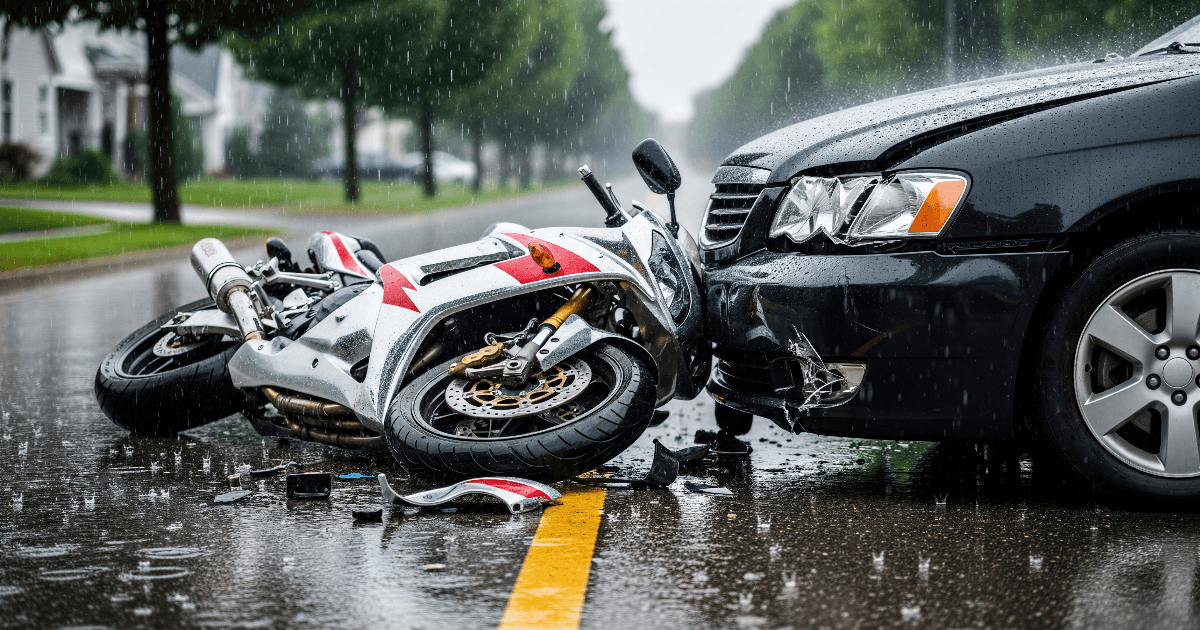
“I didn’t see the motorcycle” — it is one of the most common things drivers say after a serious motorcycle crash. For injured riders and their families, that explanation can feel impossible to accept. And in New York, failing to see a motorcycle does not automatically excuse a driver from responsibility.
Motorists are required to look carefully, yield when required, check blind spots, avoid distractions, and share the road safely. The motorcycle was there. The rider had the right of way. The crash happened because another driver turned, merged, opened a door, or pulled out without properly checking for traffic.
At The Bongiorno Law Firm, we represent injured motorcycle riders throughout Long Island, New York City, Nassau County, Suffolk County, Queens, Brooklyn, and the surrounding areas. We understand exactly how insurance companies may try to blame the rider — even when the crash happened because a driver failed to see what was plainly there.
Why Are Motorcycles So Often Missed by Drivers?
Motorcycles are smaller than passenger vehicles, but that does not make them invisible. Drivers often fail to see motorcycles because they are not looking carefully enough, not checking long enough, or not expecting a motorcycle to be there.
Many motorcycle crashes happen because a driver looks toward traffic but fails to recognize the rider before turning, merging, backing up, or opening a door. In other words, the issue is not always whether the motorcycle was visible. The issue is often whether the driver was paying proper attention.
Common reasons drivers fail to see motorcycles include:
- Drivers Look for Cars, Not Motorcycles
Many drivers are conditioned to scan for larger vehicles. Because motorcycles have a smaller visual profile, a careless driver may look in the general direction of a rider but fail to actually register the motorcycle.
That does not make the crash unavoidable. Drivers are responsible for seeing what is there to be seen. - Poor Judgment at Intersections
Intersections are especially dangerous for motorcycle riders. A driver making a left turn may misjudge a motorcycle’s speed or distance and turn directly into the rider’s path. These crashes can happen in seconds, especially when drivers rush to beat traffic or assume they have enough time to turn. - Blind Spots During Lane Changes
Motorcycles can be hidden in a vehicle’s blind spot, especially near trucks, SUVs, vans, and larger passenger vehicles. A driver who changes lanes without checking mirrors and blind spots can sideswipe or cut off a rider.
Checking a mirror once is not always enough. Drivers must make sure the lane is clear before moving over. - Distracted Driving
A driver who is texting, looking at GPS, eating, adjusting the radio, or talking to passengers may miss a motorcycle entirely. Even a moment of distraction can cause a devastating crash. When a driver says they never saw the motorcycle, distracted behavior should always be considered. - Failure to Check Before Opening a Car Door
In New York City, Brooklyn, Queens, and other dense traffic areas, motorcycle dooring accidents can happen when someone opens a car door into the path of an approaching rider. A rider may have little or no time to avoid the impact.
You can read more about this specific danger in our blog on liability for motorcycle dooring accidents in NYC. - Obstructed Views
Parked cars, delivery trucks, traffic, trees, construction barriers, and road design can all affect visibility. However, an obstructed view does not give drivers permission to proceed blindly.
Drivers must use reasonable care before turning, merging, pulling out, or entering traffic.
Drivers May Look But Still Fail to See the Motorcycle
In some motorcycle accidents, a driver may claim they looked before turning or changing lanes but still did not see the rider. This is sometimes referred to as inattentional blindness, meaning a person may look in a direction but fail to process what is actually there.
This lack of attention can happen when drivers are focused on finding cars, trucks, traffic lights, pedestrians, or a gap in traffic, but fail to recognize an approaching motorcycle.
That may explain why a crash happened, but it does not automatically excuse the driver. A driver has a responsibility to actually see what is there to be seen. When a motorcycle has the right of way, a driver’s failure to recognize it may support a claim that the driver failed to keep a proper lookout.
“I Didn’t See the Motorcycle” Is Not a Legal Defense by Itself
After a motorcycle crash, drivers often say they looked but did not see the rider. That statement may explain what happened, but it does not automatically excuse the crash.
A driver cannot avoid responsibility simply by saying they did not see the rider. In many cases, “I didn’t see the motorcycle” is evidence that the driver failed to keep a proper lookout.
New York law requires drivers making a left turn to yield the right of way to vehicles approaching from the opposite direction when those vehicles are in the intersection or close enough to create an immediate hazard under Vehicle and Traffic Law § 1141.
That means a driver cannot simply turn left and then avoid responsibility by saying the motorcycle was hard to see. If the motorcycle had the right of way, the driver may still be liable for failing to yield, failing to keep a proper lookout, or making an unsafe turn.
Why Left Turn Motorcycle Accidents Are So Dangerous
One of the most common motorcycle crash scenarios happens when a driver turns left in front of an oncoming motorcycle.
This can happen on high traffic roads across Long Island and New York City, including:
- Sunrise Highway
- Hempstead Turnpike
- Jericho Turnpike,
- The Long Island Expressway (LIE)
- The Belt Parkway
- Queens Boulevard
- Atlantic Avenue
- Other busy intersections throughout Nassau, Suffolk, Queens, and Brooklyn.
A driver may think there is enough time to turn, may misjudge the motorcycle’s speed, or may fail to see the motorcycle altogether.
These crashes are especially dangerous because the rider often has little time to react. Unlike people inside a vehicle, motorcyclists do not have airbags, seatbelts, or a vehicle frame protecting them.
A left-turn motorcycle crash can cause broken bones, traumatic brain injuries, spinal injuries, road rash, internal injuries, amputations, or fatal injuries.
If you were involved in a crash, it is important to take the right steps immediately. Our guide explains what to do after a motorcycle crash on Long Island explains how to protect your health, your evidence, and your legal rights.
How Driver Negligence Is Proven After a Motorcycle Accident
Motorcycle accident cases often depend on proving what the driver saw, what the driver should have seen, and whether the driver acted reasonably.
Evidence may include:
- Police report documenting the crash location, statements, traffic violations, and contributing factors.
- Surveillance video from homes, businesses, traffic cameras, dash cameras, or nearby properties.
- Witness statements from pedestrians, other drivers, passengers, bicyclists, or nearby workers.
- Vehicle damage showing the angle and force of impact.
- Skid marks and debris fields that help reconstruct how the crash happened.
- Cell phone records if distracted driving is suspected.
- Accident reconstruction analysis in serious injury or disputed liability cases.
Photos of the scene including traffic signals, signs, lane markings, lighting conditions, parked vehicles, and obstructions.
The sooner evidence is preserved, the stronger the case may be. Video footage can be deleted. Vehicles can be repaired. Witness memories can fade. That is why injured riders should speak with an experienced New York motorcycle accident lawyer as soon as possible.
Insurance Companies Often Try to Blame the Rider
Motorcycle riders are frequently treated unfairly after a crash. Insurance companies may try to argue that the rider was speeding, weaving, riding aggressively, or taking unnecessary risks, even when the evidence does not support those claims.
This is one reason motorcycle accident cases require careful investigation. The focus should not be on unfair stereotypes about riders. The focus should be on the facts.
Did the driver fail to yield? Did the driver make an unsafe left turn? Did the driver change lanes without checking? Did the driver open a door into traffic? Did the driver pull out from a driveway, parking lot, or side street without making sure it was safe? Was the driver distracted, rushing, or not paying proper attention?
Under New York’s comparative negligence law, CPLR § 1411, an injured person is not automatically barred from recovery even if they are found partially at fault. Instead, damages may be reduced based on the percentage of fault assigned.
That means even if an insurance company tries to blame the rider, it does not necessarily mean there is no case.
Motorcycle Visibility Does Not Replace Driver Responsibility
Riders can take steps to improve visibility, such as using headlights, wearing reflective gear, choosing lane positions carefully, and riding defensively.
But visibility tips do not shift the entire burden onto motorcyclists. Drivers still must look. Drivers still must yield. Drivers still must check blind spots. Drivers still must avoid distractions. Drivers still must share the road.
A motorcycle rider should not lose their rights simply because a driver failed to pay attention.
Common Motorcycle Accident Scenarios Where Drivers Say They “Didn’t See” the Rider
Drivers often claim they did not see the motorcycle in crashes involving:
- Left turns at intersections: A driver turns across the rider’s lane and causes a direct collision.
- Lane changes on highways: A driver moves into the rider’s lane without checking blind spots.
- Parking lot exits and driveways: A driver pulls into traffic without seeing an approaching motorcycle.
- Dooring accidents: A driver or passenger opens a vehicle door into the rider’s path.
- Rear end collisions: A driver follows too closely or fails to notice the motorcycle slowing down.
- Stop sign and yield sign crashes: A driver rolls through a stop or yield sign and enters the rider’s lane.
- Nighttime or low light crashes: A driver fails to account for reduced visibility and proceeds unsafely.
Each scenario requires a close review of the evidence. The fact that a driver says they did not see the motorcycle does not end the case.
What To Do After a Driver Fails To See Your Motorcycle
After a motorcycle accident in New York, take these steps if you are able:
- Call 911 and request medical help.
- Report pain or symptoms immediately, even if they seem minor.
- Take photos and videos of the scene, vehicles, roadway, traffic signs, debris, and visible injuries.
- Get names and contact information for witnesses.
- Ask nearby businesses or homes if they have camera footage.
- Do not give a recorded statement to the insurance company without legal guidance.
- Save your helmet, clothing, motorcycle, and damaged gear.
- Contact a motorcycle accident attorney as soon as possible.
Motorcycle cases can become evidence battles quickly. A strong investigation may help prove that the driver failed to see the motorcycle because they failed to look properly.
Speak With a New York Motorcycle Accident Lawyer
If a driver failed to see your motorcycle, turned in front of you, changed lanes into you, opened a door into your path, or caused a crash anywhere in New York, you may have the right to pursue compensation.
Before you let an insurance company blame you for a crash you did not cause, contact The Bongiorno Law Firm. We handle motorcycle accident cases throughout Long Island and New York City, including Nassau County, Suffolk County, Queens, Brooklyn, and surrounding communities.
Our team investigates how the crash happened, preserves evidence, deals with the insurance companies, and fights for the compensation injured riders deserve.
To learn more, visit our Motorcycle Injuries practice area page or contact us for a case review.
The Bongiorno Law Firm We Care. We Fight. You Win.
FAQ: Why Drivers Fail to See Motorcycles
Why do drivers say they did not see motorcycles?
Drivers may fail to see motorcycles because motorcycles are smaller than cars, may be hidden in blind spots, or may not be what the driver is expecting to see. However, drivers are still responsible for keeping a proper lookout and sharing the road safely.
Is a driver still at fault if they did not see the motorcycle?
A driver may still be at fault if they failed to yield, made an unsafe turn, changed lanes without checking, opened a door into traffic, or otherwise failed to use reasonable care. Saying “I didn’t see the motorcycle” does not automatically excuse negligent driving.
Are Left-Turn Motorcycle Accidents Common?
Left turn motorcycle accidents are a common and serious type of crash. They often happen when a driver turns across the path of an oncoming motorcycle after misjudging the rider’s speed or failing to see the motorcycle.
Can I still recover money if the insurance company says I was partly at fault?
Possibly. New York follows comparative negligence under CPLR § 1411, which means an injured rider may still recover compensation even if they are found partially responsible. Any recovery may be reduced by the rider’s percentage of fault.
What evidence helps prove a driver failed to see a motorcycle?
Helpful evidence may include surveillance video, dash camera footage, witness statements, police reports, crash scene photos, vehicle damage, phone records, and accident reconstruction analysis.
What should I do after a motorcycle crash in New York?
Get medical help, call the police, document the scene, preserve evidence, avoid giving recorded statements to insurance companies, and speak with an experienced motorcycle accident attorney. You can also review our guide on what to do after a motorcycle crash on Long Island.
Legal Disclaimer
This blog is for informational purposes only and does not constitute legal advice. Reading this blog does not create an attorney client relationship. Every case is different, and prior results do not guarantee a similar outcome. If you were injured in a motorcycle accident, you should speak with an attorney about your specific situatio
Attorney Advertising. Prior results do not guarantee a similar outcome.